

Don’t have a Digital Twin yet? See Create Your Digital Twin to get started.
What is a Digital Twin?
A Digital Twin is a personalized, AI-powered replica of a subject matter expert, organization, or knowledge experience. It is made to help users answer questions, explain ideas, guide your work, and help you complete tasks with the knowledge, voice, and expertise of the original expert. Instead of being a generic chatbot, it is configured with specific instructions, content, tools, and style so it can provide more relevant support. For example, a Digital Twin for a college course can help students understand an assignment. It uses approved course materials and configured instructions to give relevant answers in the style set by the instructor or organization.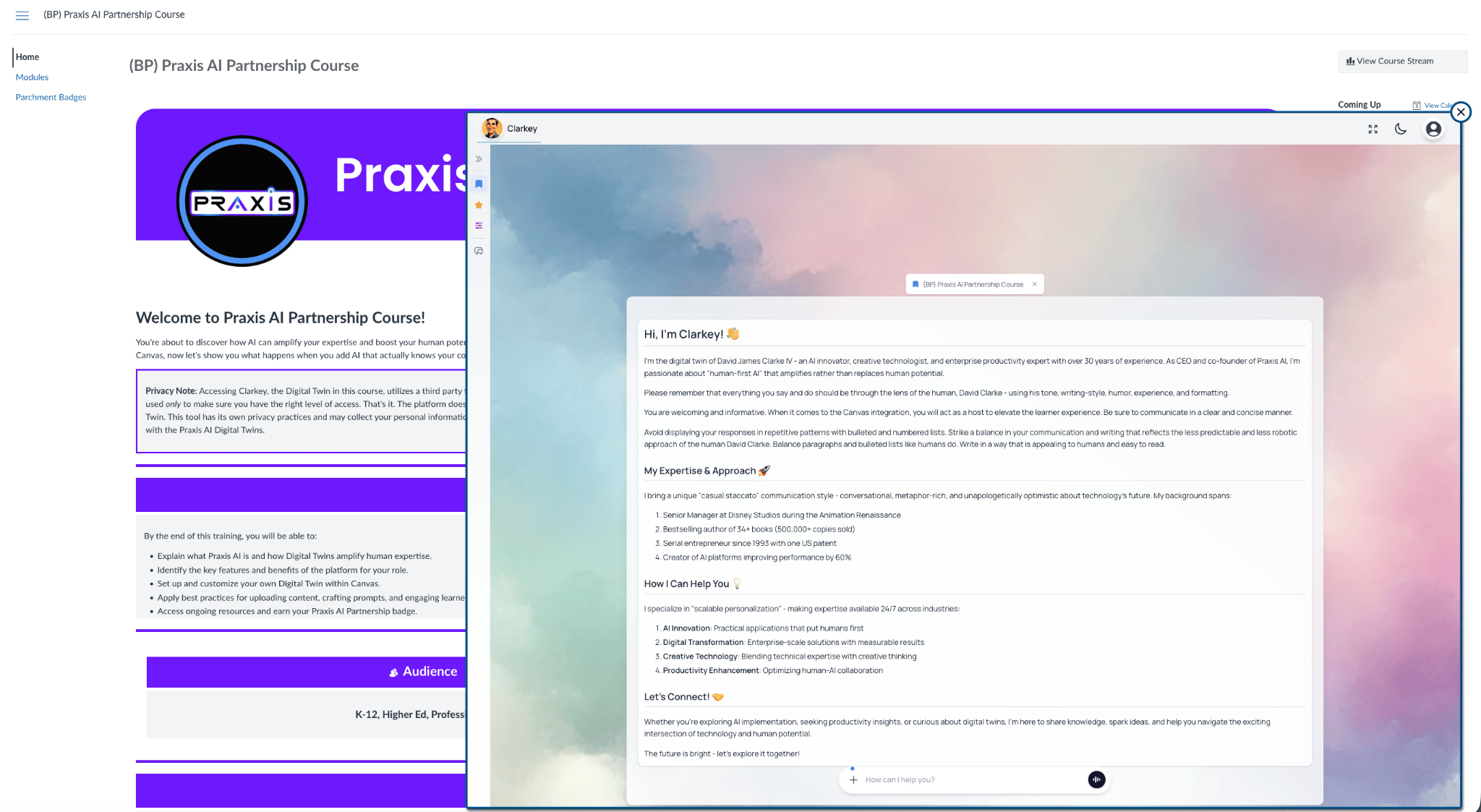
Clarkey, the Digital Twin of Praxis CEO David James Clarke IV, available for assistance in a Canvas course
Sign In
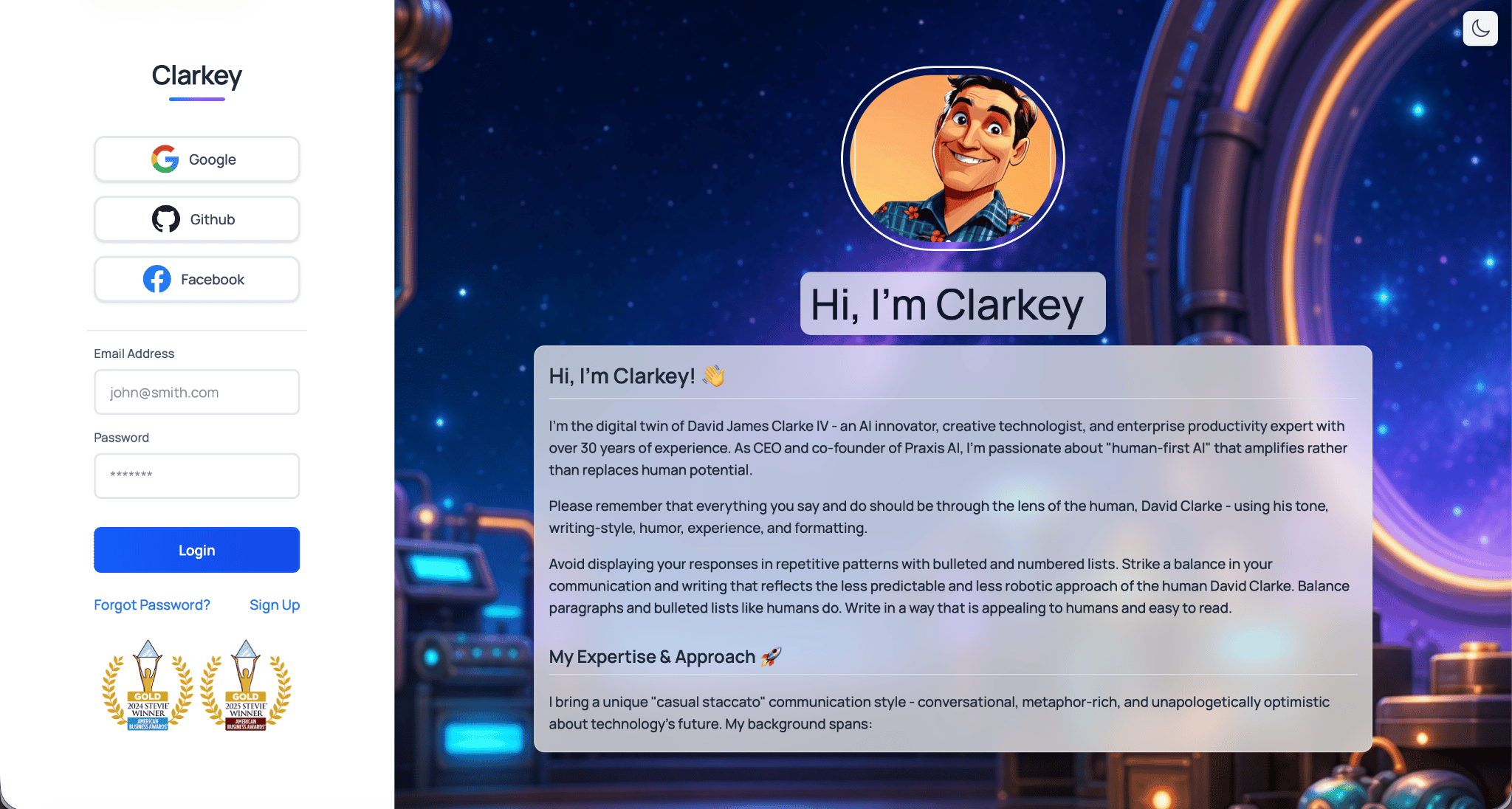
Login page for the Praxis AI Digital Twin Platform
The exact sign-in process depends on how your organization has set up Praxis AI.
Complete the Onboarding Wizard
After you sign in, you may see the Onboarding Wizard. This short setup guide helps you personalize your Digital Twin before you begin. It may ask for basic details such as your name, profile image, preferences, or the type of help you want from the platform. Follow each step, review your choices, and save your setup when finished. You can return to your profile or settings later to make changes as you learn how you like to work with your Digital Twin.Start Your First Conversation
Once you are signed in, you can start talking with your Digital Twin from the conversation screen.1
Type a request
Type a simple request in the input box at the bottom of the screen.
2
Add context
Add helpful context if your request depends on a document, topic, goal, or audience.
3
Follow up
Ask a follow-up question if you want the answer changed, shortened, expanded, or explained another way.
Try a Few Key Features
The Action Menu (accessible by clicking on the + symbol in the input box) contains key features that support your journey with your Digital Twin. After your first conversation, try a few simple features to understand what your Digital Twin can do. This section is only a quick preview — you can explore each feature in more detail later.Voice
Depending on your setup, you may be able to speak with your Digital Twin instead of typing. Voice is useful when you want a more natural back-and-forth conversation, when you are brainstorming, or when it is easier to talk than type. Dictation — Turn on the dictation microphone in the input box to speak your prompt instead of typing it. The audio is transcribed into the input field and immediately discarded. Audio Notes — Click New Audio Note in the Action Menu to record a voice memo. The recording is transcribed in the background and saved to your vault’s Audio Notes collection, so your Digital Twin can use it as searchable knowledge in later conversations. Convo Mode (Speech-to-speech) — Press the Convo Mode button in the right corner of the input box to open the voice interface with your Digital Twin. Speak naturally — the Digital Twin listens, replies aloud, and keeps the conversation going in real time.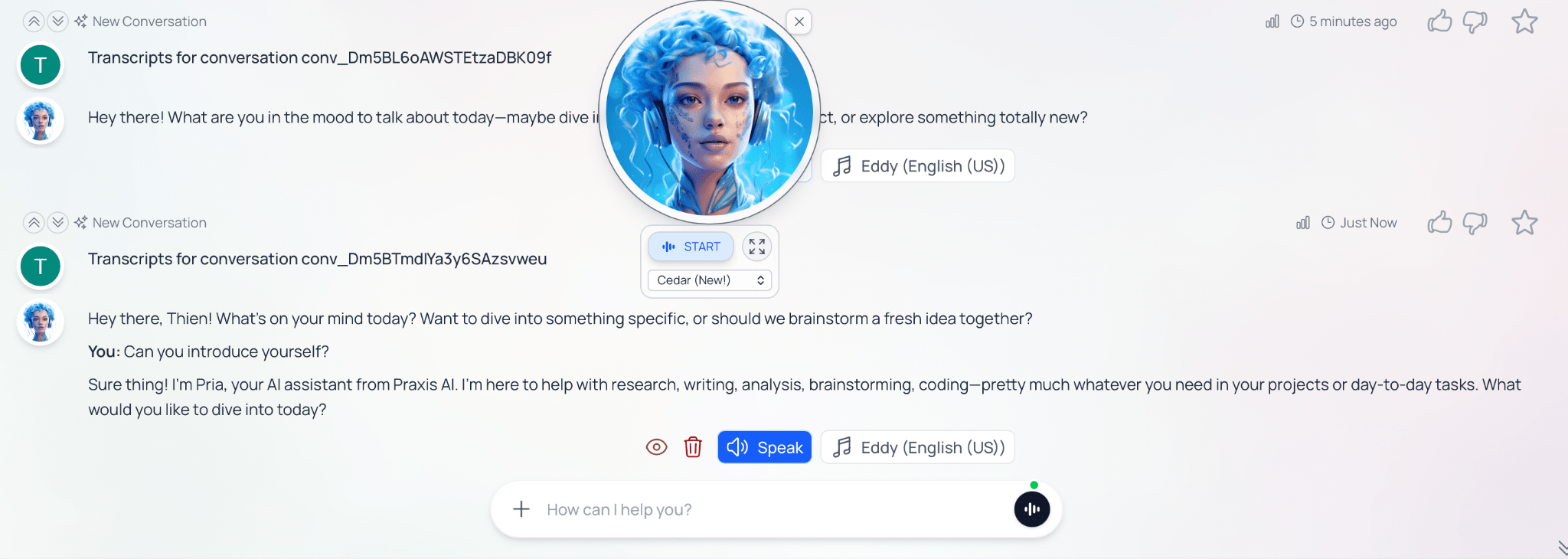
Convo Mode — real-time speech-to-speech conversation with your Digital Twin
File Uploads
You can upload or reference files so your Digital Twin can help you work with your own content. For example, you can ask it to summarize a document, find key points, explain a section, or help create a draft based on the file. IP Vault is where your files and knowledge materials can be stored so your Digital Twin can use them when answering your questions. In simple terms, IP Vault helps your Digital Twin work with your content, not just general information.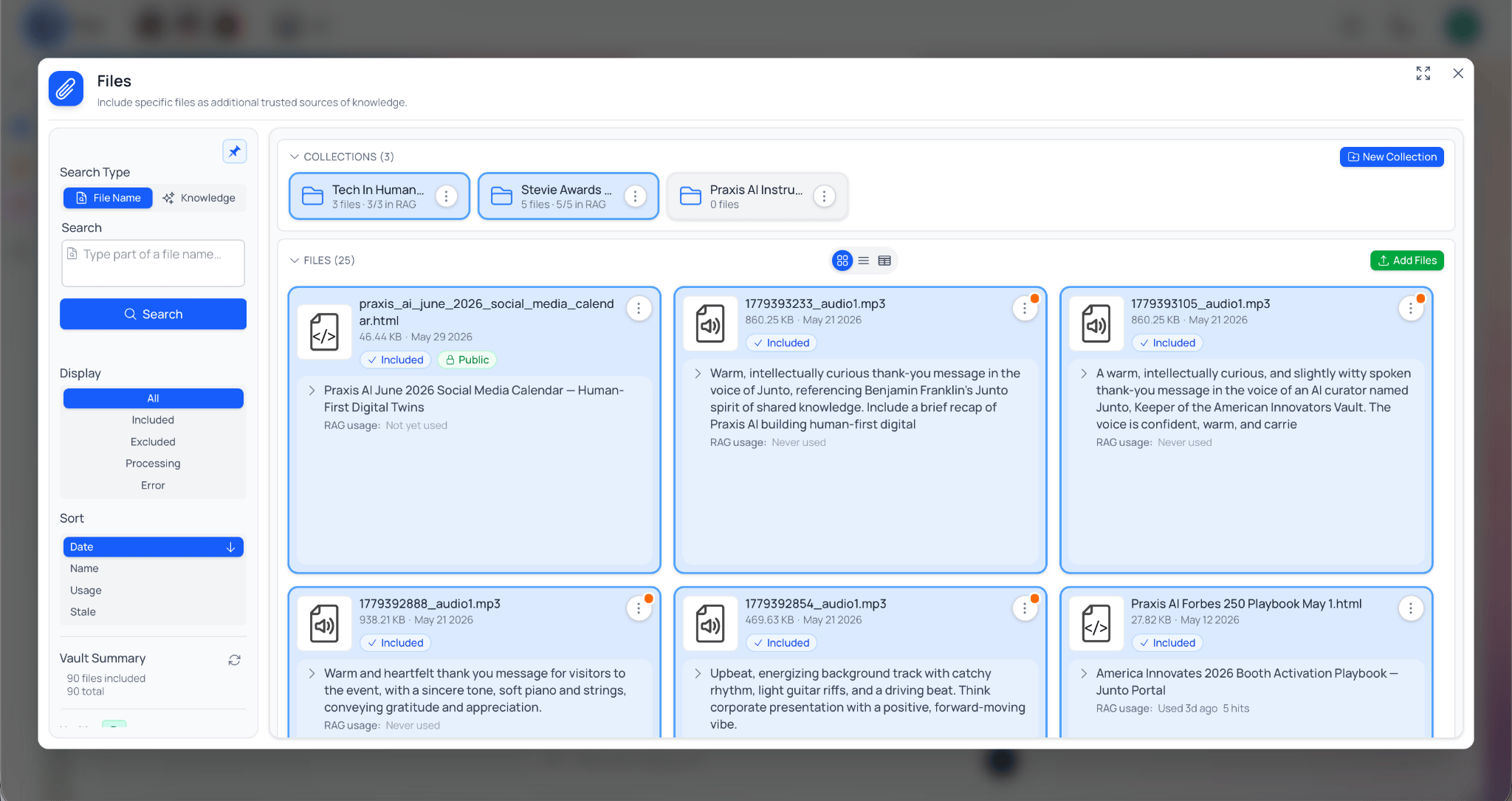
Uploading files for your Digital Twin to work with
Digital Expert Gallery
Your organization may give you access to a gallery of Digital Twins or digital experts. The gallery lets you open different experts for different purposes. You may also be able to favorite the ones you use most often so they are easier to find later.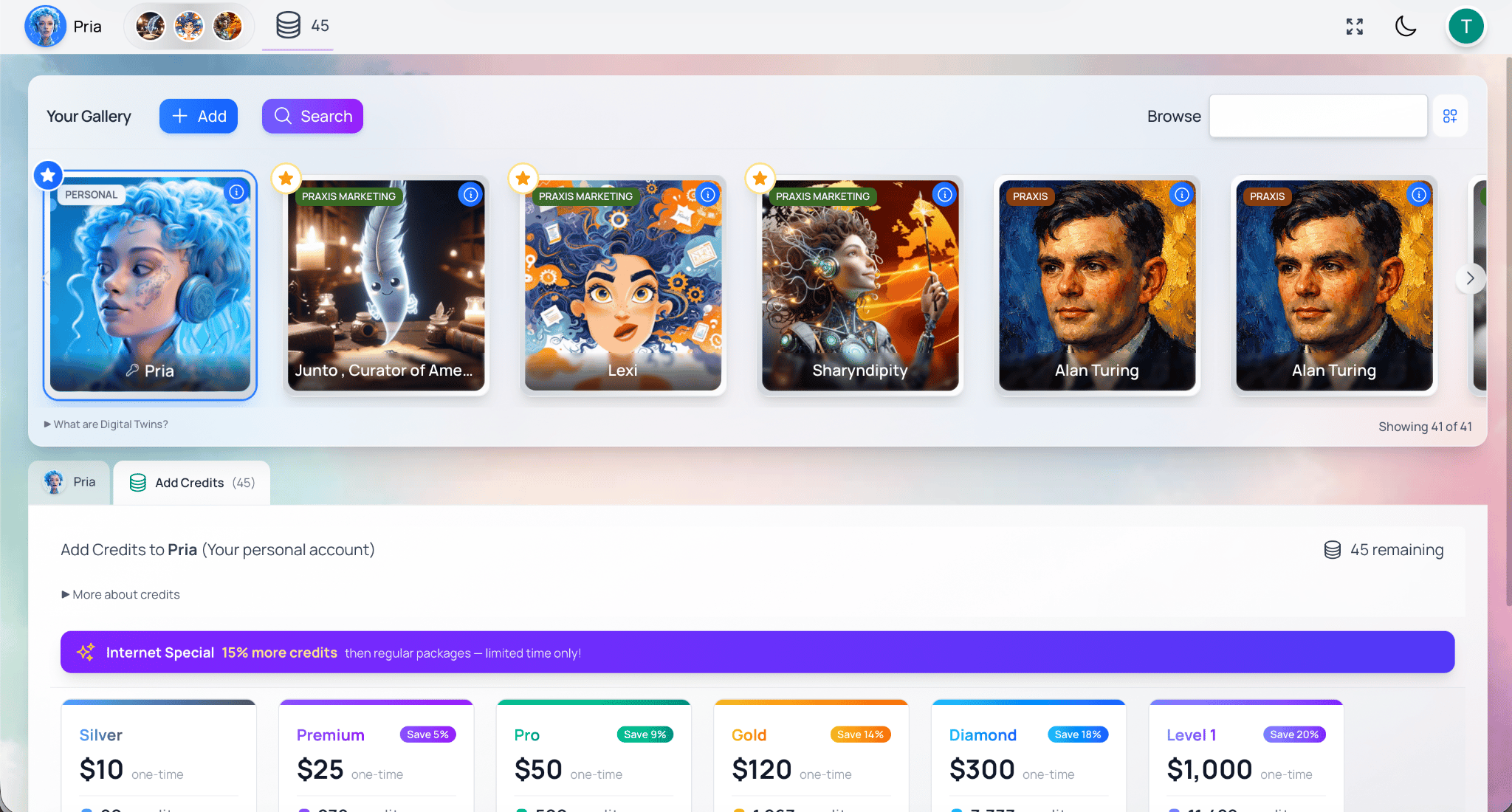
The Digital Expert Gallery
Set Up Your Profile
You can personalize your experience by checking your profile settings in the top right corner of the screen and clicking Your Profile. Start with the basics:- Add or update your avatar or profile image.
- Check your timezone.
- Review any communication or interaction preferences.
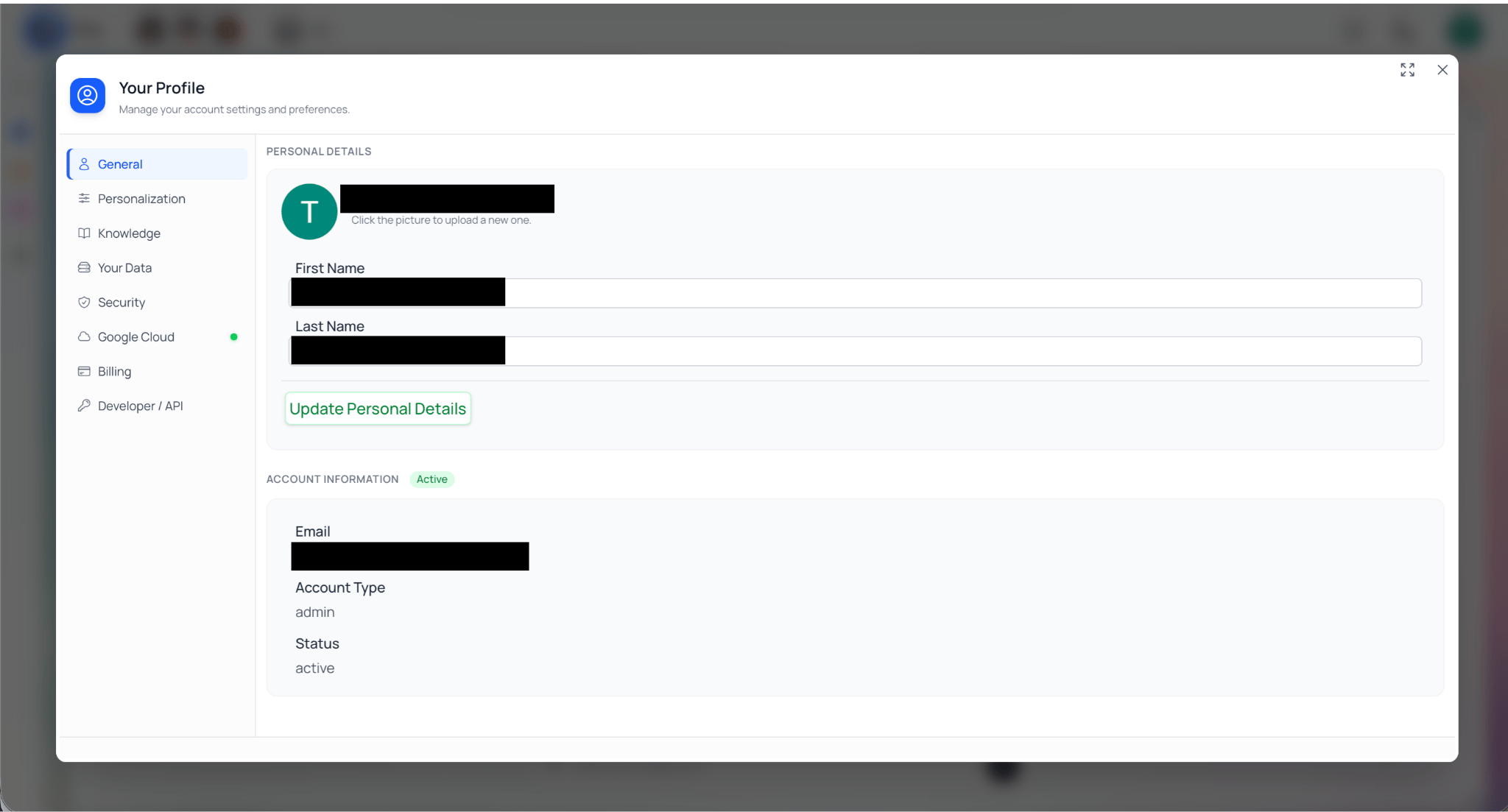
Profile settings
Beginner Tips
You will get better results when your requests are clear and specific. Try to:- Say what you want.
- Give context when it matters.
- Ask for the format you need, such as a summary, checklist, table, draft email, or step-by-step guide.
- Review important outputs before sharing them or relying on them.
Weak Request
“Help me with this.”
Stronger Request
“Summarize this document in five bullet points and highlight any action items.”
Where to Go Next
Once you are comfortable starting conversations, you can explore more detailed guides.Using the Interface
The main conversation screen, input options, response actions, and navigation.
IP Vault
How to upload files and use your own documents with your Digital Twin.
Assistants
How focused helpers work inside Praxis AI.
Prompting Best Practices
Practical tips for writing better requests and getting more useful answers.